What Is A Steel Portal Frame Structure?
With the rapid evolution of industrial infrastructure, logistics and warehousing, and commercial support facilities, steel structures have gradually replaced traditional concrete structures as the preferred choice for various types of single-story, long-span buildings, thanks to their core advantages of high strength, light self-weight, fast construction, and high adaptability.
Among the many steel structural systems, the portal frame steel structure stands out for its exceptional space utilization, controllable construction costs, and standardized construction system. This classic steel portal frame structure is widely used in steel warehouses, industrial plants, agricultural sheds, and other applications, making it the most prevalent steel structural system in current civil and light industrial construction.
Steel structures are fundamental components of various construction projects, characterized by their robust steel composition and distinctive appearance. They comply with specified chemical composition standards and meet appropriate strength requirements. This article will provide a comprehensive analysis of portal frame steel structures.Based on the project’s unique specifications, the steel components can assume various shapes, dimensions, and thicknesses, produced through hot or cold rolling processes. In contrast, others are created by welding flat or curved plates together. Steel structures typically feature shapes such as I-beams, hollow structural sections (HSS), channels, angles, and plates.

Understanding Portal Frame Structures
Basic Definition
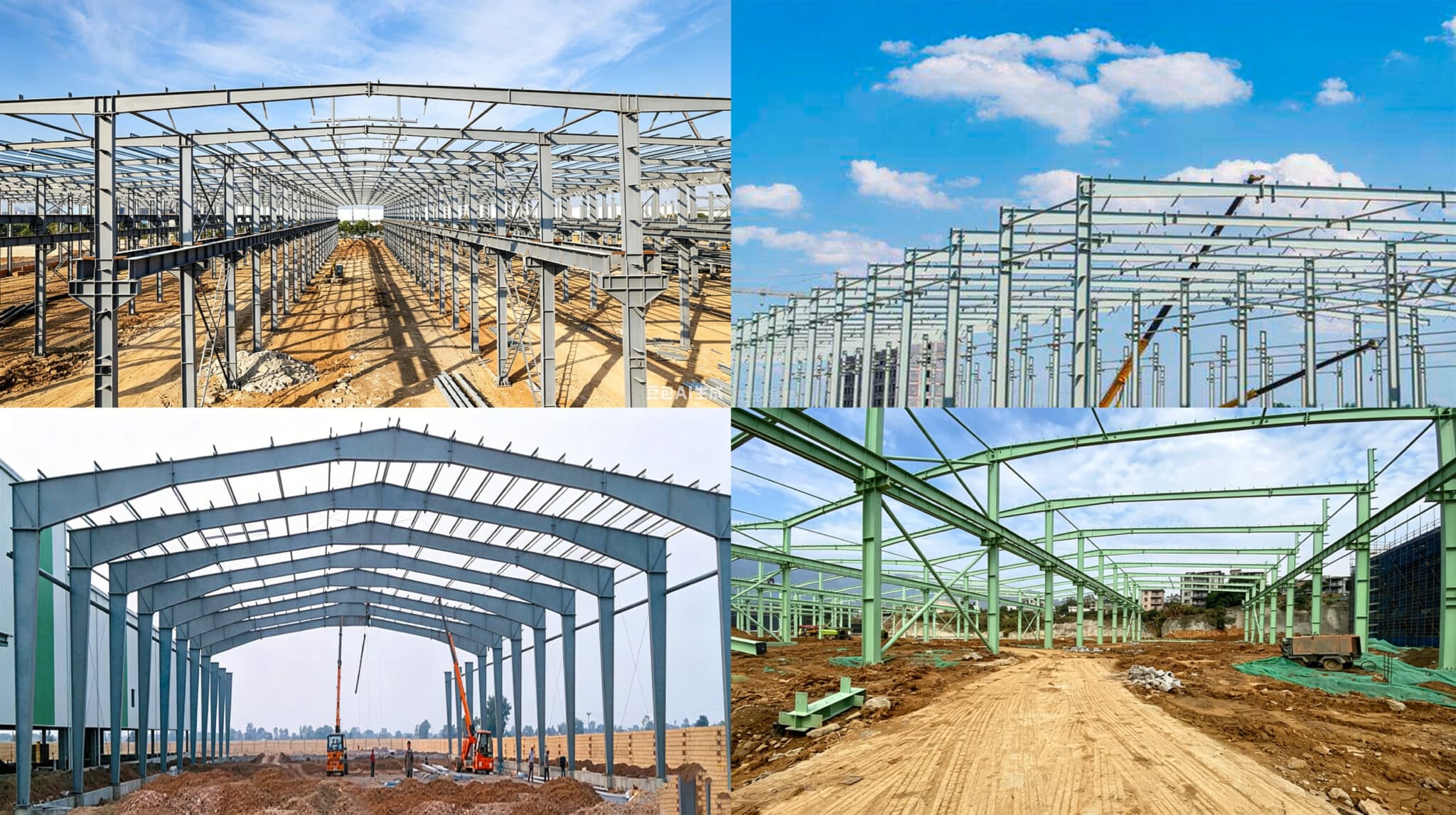
The steel portal frame is a classic rigid frame structural system in modern construction engineering and represents a core category of light-gauge steel structures. Its core configuration consists of two vertical steel columns connected to horizontal steel beams or sloped roof trusses via rigid joints, forming repetitive “portal-type” load-bearing units. Among the five major mainstream steel structural systems, it is the structural form best suited for single-story, long-span steel portal frame buildings.
Unlike conventional steel structures, the most distinctive feature of portal frames is the rigid connection between beams and columns, which enables the transfer of bending moments and shear forces as a unified system. This eliminates the need for intermediate columns, allowing for the creation of exceptionally large, unobstructed interior spaces that perfectly meet the architectural requirements for large-scale, open-plan buildings. This structural system is suitable for single-story buildings with heights of up to 18 meters, low loads, and large spans.
The primary objective is to create large, unobstructed internal spaces, free from intermediate columns, making it the system of choice for warehouses, factories, and agricultural buildings.
Core Design Concept
The design of the portal steel frame structure is centered around four principles: simplicity, efficiency, economy, and stability. During the design process, the lightweight section optimization of the structural steel beams and columns is relied upon to ensure the structural load-bearing capacity, wind resistance, earthquake resistance, and snow load resistance.
At the same time, the steel usage is minimized to the greatest extent while meeting these requirements. Moreover, through standardized and modularized component design, it is adapted to the large-scale processing and manufacturing of steel structures, enabling each steel portal frame building to achieve the optimal balance of structural performance, engineering cost, and construction period.
Industry Positioning of the Steel Structure System
Currently, steel structures in construction are primarily classified into five major types: frame structures, truss structures, space frame structures, arch structures, and portal frame structures. In addition, there are specialized steel structures such as steel arch bridges and cable-stayed bridges.
Each type of structure is suited to specific applications: frame structures are commonly used in multi-story buildings; truss and space frame structures are suitable for complex, long-span roofs; while steel portal frame structures are primarily used in single-story industrial and civil buildings. Thanks to their simple structure, ease of construction, and high space utilization, they have become the benchmark system for lightweight steel structures.

Key Components of a Portal Frame Structure
A complete portal steel frame steel structure building consists of main load-bearing components, auxiliary stabilizing components, enclosure components and foundation structure. Each component has a clear function and works together to bear the load, jointly ensuring the stability, safety and practicality of the building.
Main Load-bearing Steel Structure Components
Steel Columns: As vertical core load-bearing members, they primarily support vertical loads such as the roof, equipment, and snow accumulation, while also resisting lateral forces caused by wind and earthquakes. They are typically fabricated from hot-rolled H-section steel or welded variable-section steel.
Structural Steel Beams/Rafter Beams: These are divided into horizontal steel beams and rafter beams for pitched roofs. They are installed transversely between steel columns and rigidly connected to them to form an integrated framework. They primarily bear roof loads while transmitting bending moments through rigid joints.
Base Plates: These are the core connecting components for steel columns, custom-fabricated from thickened steel plates. They connect the steel columns to the foundation, ensuring the smooth transfer of loads.
Supporting and Load-bearing Components
Secondary members are primarily used to optimize structural load-bearing capacity, enhance lateral stability, and compensate for the main frame’s performance shortcomings in wind resistance, seismic resistance, and load distribution.
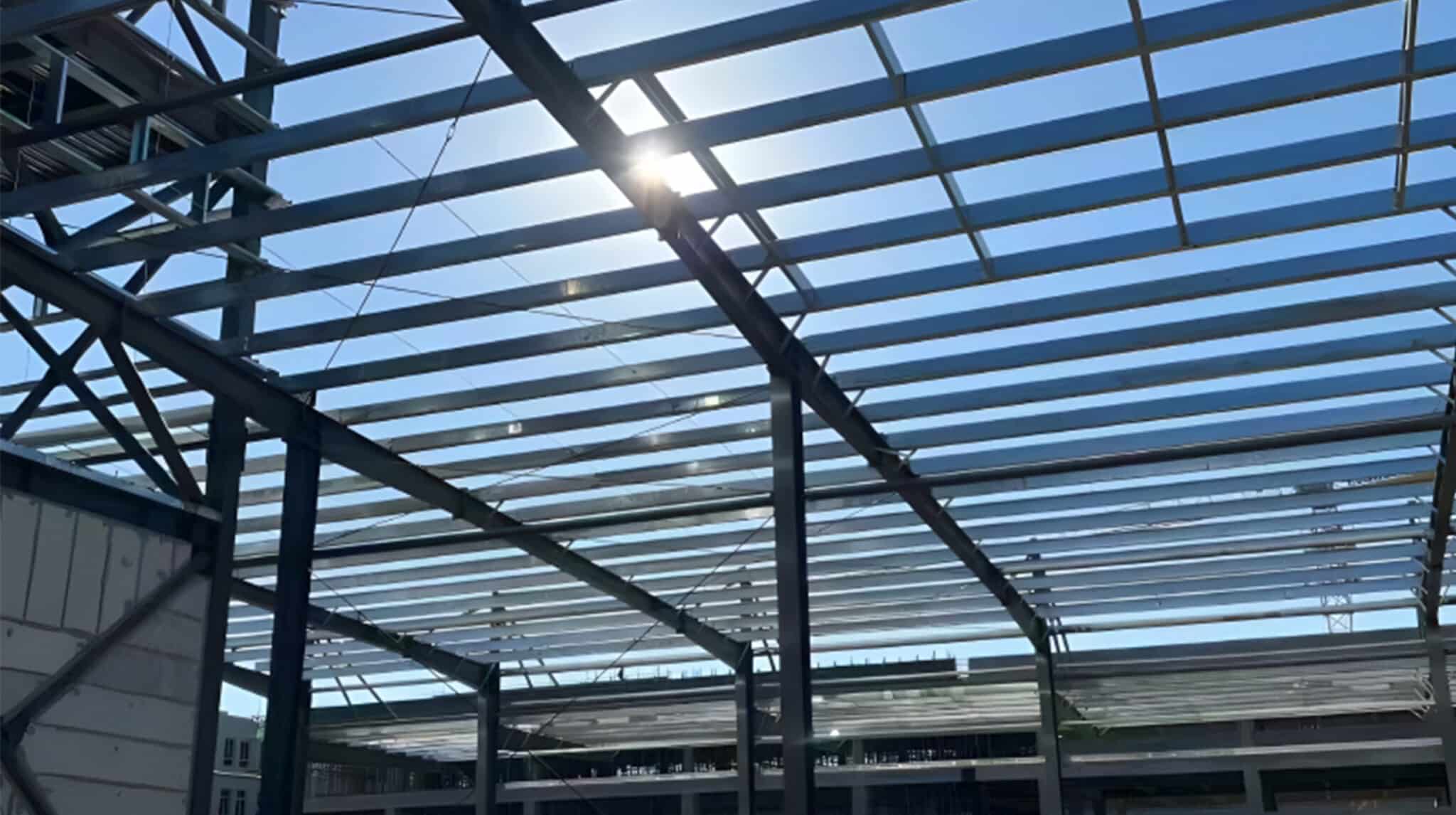
Bracing System: Composed of diagonal members such as steel tie rods, angle irons, and steel cables, these are evenly spaced within the frame to prevent lateral deformation and collapse of the structure.Purlins and Wall Surface Beams: Purlins are laid horizontally throughout the roof steel beams to sustain the roof covering sheathing panels; wall beam of lights are fixed to the outer sides of the steel columns to birth the load of the wall panels. Together, they evenly distribute the forces acting on the building envelope and enhance the overall structural rigidness.
Enclosure and Foundation Parts
Enclosure Panels: Serving as the structure’s external protective layer, these consist of metal color-coated steel panels, insulated sandwich panels, and composite panels.They provide waterproofing, thermal insulation, warm insulation, and deterioration resistance, while additionally using customizable styles to boost the building’s aesthetic allure and fulfill the useful and aesthetic needs of various setups.
Building Foundations: Relying on site soil conditions, building period, and load needs, structure types such as separated footings, plethora foundations, and pile structures may be employed. These work as the load-bearing base for the entire steel framework, guaranteeing long-lasting stability and resistance to negotiation and exterior effects.

Characteristics of Steel Structure Fabrication Processes
Standardized Factory Manufacturing Process
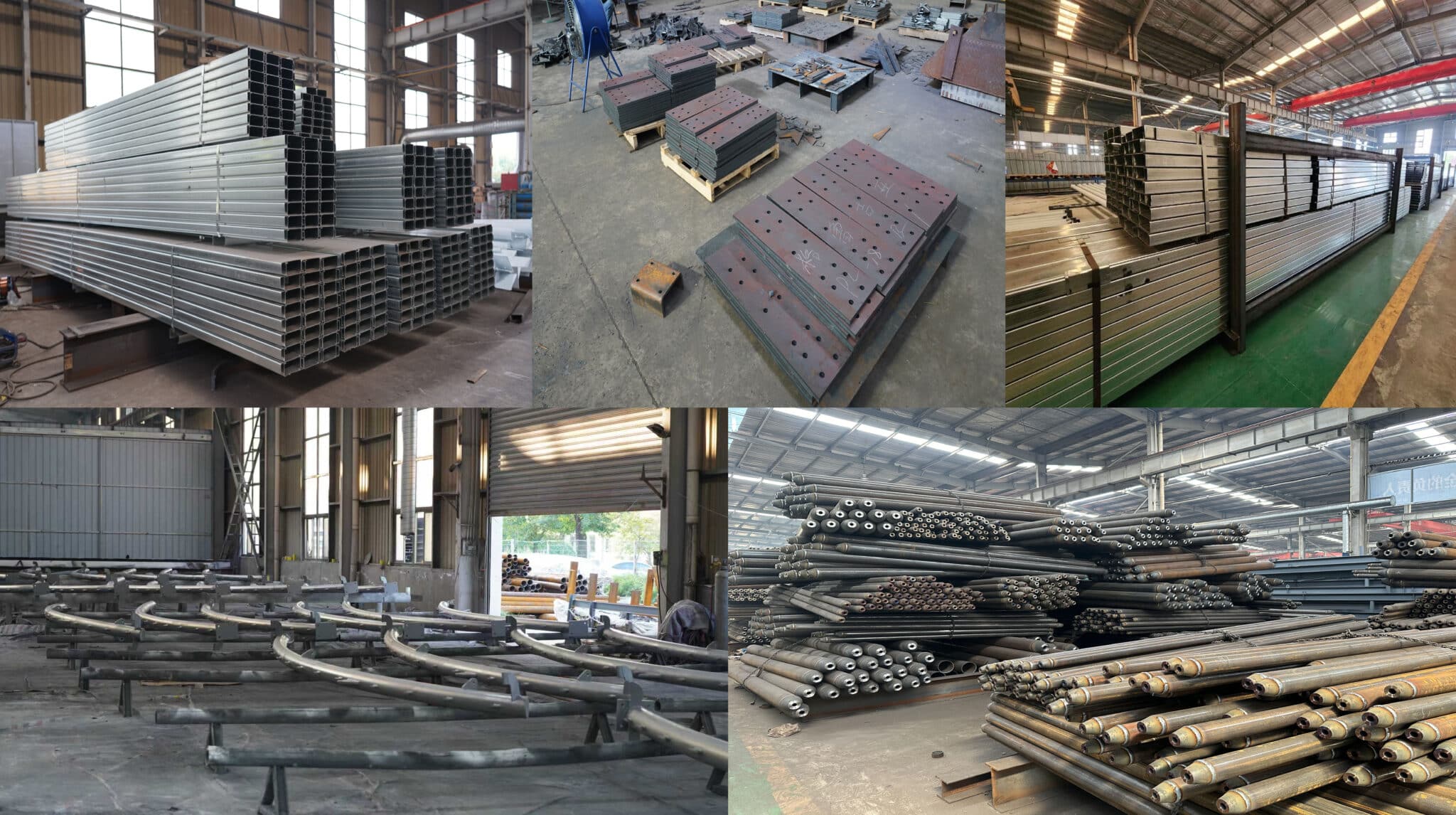
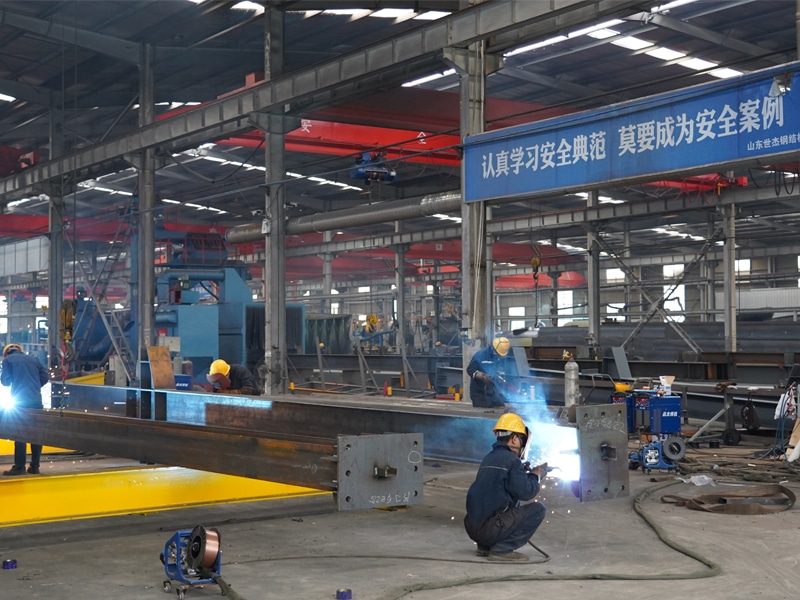
All core steel components of the portal steel frame are manufactured to standardized specifications in a specialized factory, undergoing multiple processes including hot rolling, cold rolling, welding, cutting, rust removal, and anti-corrosion coating. Common components include I-beams, rectangular tubes, angle steel, and steel plates.
All components strictly adhere to mechanical standards and dimensional specifications, ensuring minimal dimensional tolerances. Factory production effectively reduces material waste on-site and ensures that all components meet uniform strength and dimensional standards.
Modular On-Site Assembly Construction
During the construction phase, “factory fabrication” and “on-site foundation work” can proceed simultaneously, significantly shortening the construction schedule. After prefabricated components are transported to the construction site, they are rapidly assembled using cranes and bolted connections, eliminating the need for on-site welding.
Compared to traditional buildings, portal frame steel structures do not require lengthy curing periods. For a medium-sized steel warehouse of approximately 5,000 square meters, the main structure can be completed in just a few weeks, allowing for rapid commissioning and effectively improving the project’s return on investment.
Key Advantages of Steel Frame Buildings
Cost-Effective with Lower Overall Costs
Thanks to steel’s high strength and lightweight properties, the overall self-weight of portal frame steel structures is significantly lower than that of concrete structures, which can substantially reduce foundation costs. The total construction cost is 10%–20% lower than that of traditional concrete-steel structures, and long-term maintenance costs are even lower.
High Construction Efficiency and Shorter Construction Timelines
Portal frame steel structures utilize a construction model combining modular prefabrication with rapid assembly, significantly improving construction efficiency. This allows for the rapid completion of portal frame steel buildings, making them ideal for projects with tight deadlines, such as those in logistics and manufacturing.
Flexible Spaces with Exceptional Adaptability
Portal frame steel structures feature a column-free, long-span design that provides a completely open interior space, facilitating production line layouts, warehouse shelving arrangements, and the movement of large machinery. They meet diverse business needs for production capacity upgrades and site expansion, making them the most flexible form of single-story steel structures.
Sturdy, Durable, and Exceptionally Safe
The rigid, integrated frame structure of portal steel frame buildings offers excellent resistance to wind, seismic activity, and settlement. Combined with professional anti-corrosion and anti-rust coating processes, these structures boast a long service life and strong long-term structural stability.
Aesthetically Pleasing with High Customization Potential
Portal framework steel frameworks can fit numerous roofing system slopes and facade styles. When coupled with cladding panels of different materials and colors, they produce a streamlined, modern-day architectural look. This design not just fulfills commercial functional demands but likewise straightens with the visual needs of commercial and public venues, making sure that steel frameworks equilibrium functionality with aesthetic charm.
Applications of Portal Frame Structures
Industrial Buildings (Core Application Scenarios)
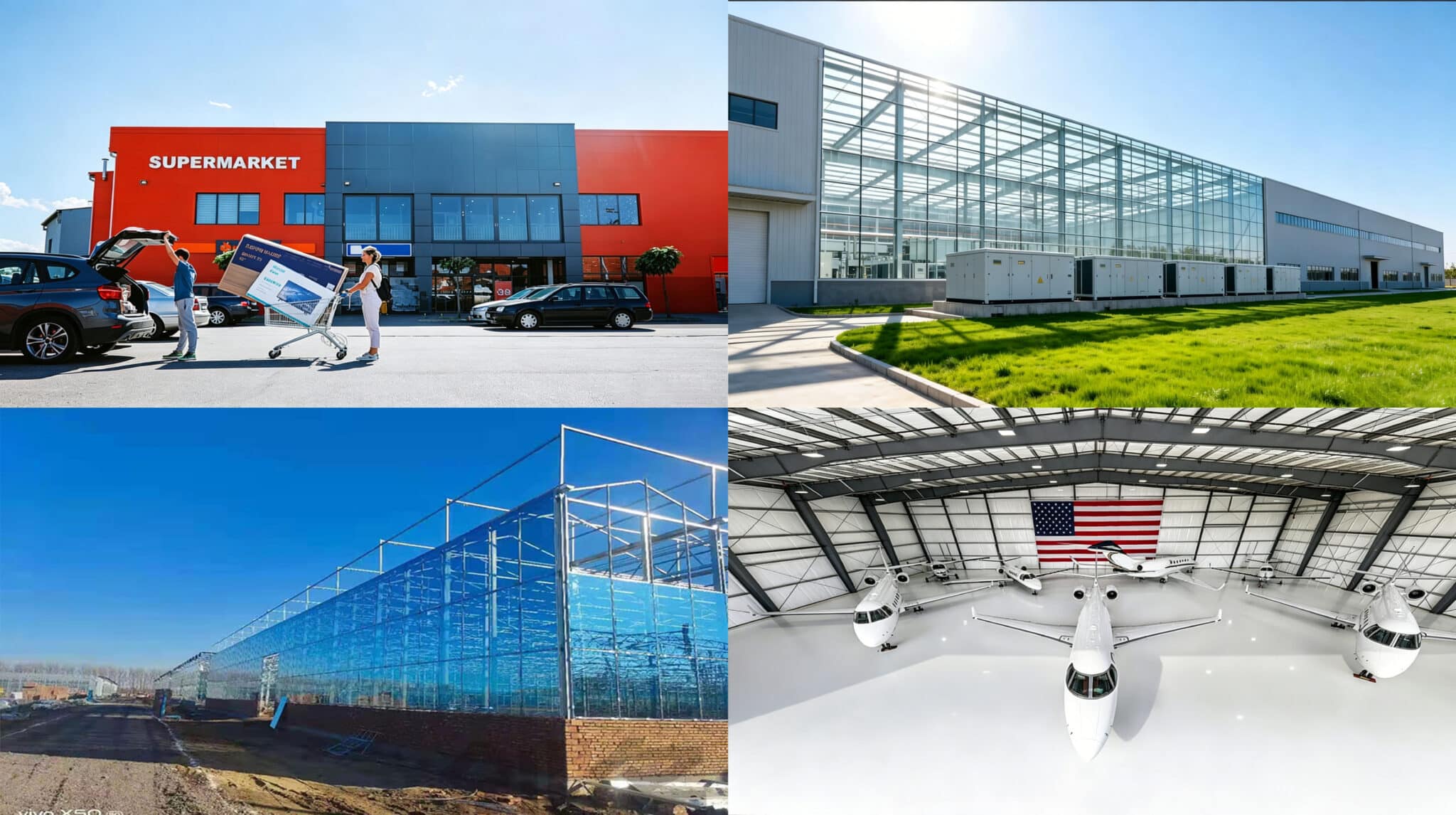
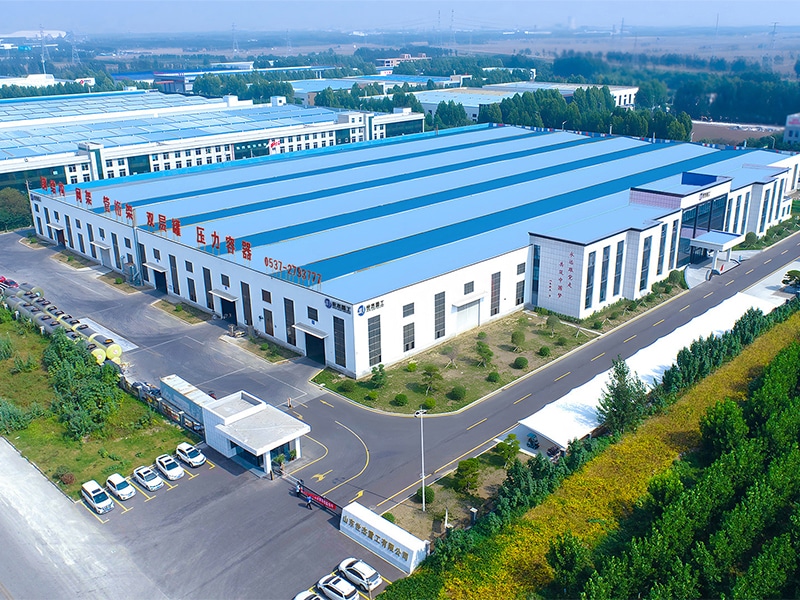
The industrial market represents the most important application circumstance for portal framework steel frameworks. This structural system is extensively adopted in numerous sorts of steel stockrooms, production plants, processing workshops, and logistics distribution centers.
The open, unblocked space is ideally suited for massive equipment procedures, cargo storage space, and vehicle web traffic, successfully meeting the core needs of commercial manufacturing and warehousing. Therefore, it is currently the mainstream choice for commercial site framework steel structures.
Agricultural Buildings
Gantry steel structures are generally used to construct farming facilities such as grain silos, animals sheds, farming bases, and agricultural stockrooms. They can withstand complicated outside settings and supply spacious, well-ventilated interiors, offering safe and stable conditions for agricultural manufacturing, product storage space, and livestock farming.
Commercial Buildings
Commercial structures such as large supermarkets, exhibition halls, farmers’ markets, and street-front commercial venues often utilize portal steel frame structures. The open interior space allows for flexible zoning of functional areas, while the airy spatial experience accommodates commercial needs such as crowd flow management, product display, and event hosting, aligning with the rapid construction requirements of commercial projects.
Public and Special-Purpose Buildings
Special-purpose buildings such as indoor sports arenas, swimming pools, and aircraft hangars place extremely high demands on large-span, unobstructed spaces, and the structural advantages of portal frame steel structures are perfectly suited to these requirements. They can accommodate large equipment and high volumes of people while ensuring structural safety and overall aesthetic appeal, meeting the construction needs of various special-purpose steel structures.

Why Portal Frame Steel Warehouses Are So Popular in Industrial Construction?
In the current era of rapid expansion in e-commerce logistics and warehousing, portal steel frame steel structure warehouses have become the optimal solution for logistics infrastructure. Compared to traditional warehouses, the lightweight structure of the portal steel frame steel structure can reduce the investment in the foundation, and the standardized steel structure processing and manufacturing process can quickly complete the construction of the warehousing base, meeting the demand for rapid expansion of the logistics industry.
At the same time, the complete and spacious interior space of the steel structure warehouse can adapt to the layout of high-position shelves, the operation of automated warehousing equipment, and the loading and unloading operations of large trucks.
The space utilization rate is maximized. Moreover, the portal steel frame steel structure can flexibly add lighting strips, ventilation systems, and large entrance and exit doors, adapting to the ventilation, lighting, and logistics passage requirements of the warehousing industry. The long-term operation and maintenance costs are extremely low, and the cost advantage is significant.
結論
As the core system of lightweight steel structures, portal frame steel structures have become the mainstream choice for modern single-story industrial, commercial, and agricultural buildings due to their comprehensive advantages, including simple structure, structural stability, cost-effectiveness, efficient construction, open spaces, and wide adaptability. They cover the vast majority of lightweight steel structure applications.
High-quality portal frame steel structures rely not only on sound structural design but also on professional steel fabrication and standardized construction teams. If you have upcoming needs for the new construction, renovation, or customization of portal frame steel workshops, steel warehouses, or commercial steel-framed buildings, and are seeking reasonable structural solutions, accurate cost estimates, and reliable construction services, please feel free to contact us at any time.
その他のブログ記事


今すぐお問い合わせください
鉄骨構造の強化に向けた旅を始めるには、今すぐお問い合わせください。.