鉄骨構造建物の寿命は?
When discussing building lifespan, people often think of the enduring durability of brick and stone buildings or the centuries-long lifespan of wooden structures. So, what is the actual lifespan of steel structures, which play a crucial role in modern architecture? This seemingly simple question involves a complex interplay of materials science, engineering technology, environmental factors, and maintenance levels.
Design Lifespan: The Benchmark in Standards
According to China’s Unified Standard for Reliability Design of Building Structures (GB50068) and Standard for Steel Structure Design (GB50017), the design service life of ordinary building structures is generally 50 years. This means that under normal design, construction, use, and maintenance conditions, steel structure buildings can meet safety and functional requirements for 50 years.
However, “design service life” is not the same as “actual lifespan.” Just as cars have a retirement age, but a well-maintained classic car can run far beyond the specified mileage, the actual lifespan of steel structure buildings often far exceeds the 50-year benchmark.
It is worth noting that, under our company’s full life-cycle design philosophy and high-performance material system, the actual service life of our delivered steel structure buildings, under normal maintenance conditions, generally reaches 80-100 years or more, far exceeding the industry benchmark.
Key Factors Determining Lifespan
Material Durability Steel possesses advantages such as high strength, good toughness, and excellent uniformity, characteristics that make it an inherently durable material. Unlike concrete, steel does not carbonize; unlike wood, steel does not rot. Under ideal conditions, the physical properties of steel can remain unchanged for hundreds of years.
Our Advantages We strictly select high-quality steel that meets national standards and can provide special materials such as weathering steel according to project requirements. Its corrosion resistance is 4-8 times higher than ordinary steel, laying a solid foundation for long-term use.
Corrosion: The Number One Enemy of Steel Structures The biggest weakness of steel is its susceptibility to corrosion. In humid, corrosive environments, without protection, steel will rust rapidly, leading to a reduction in cross-section and load-bearing capacity. This is the most significant factor affecting the lifespan of steel structures.
Modern corrosion protection technology is quite mature:
- Coating Protection: High-quality anti-corrosion coatings can provide 15-25 years of protection, and regular recoating can extend the protective effect.
- Hot-dip Galvanizing: Galvanized layers can provide 20-50 years or even longer of protection.
- Fireproofing: Steel structures rapidly lose strength at high temperatures; fire-retardant coatings or cladding are crucial.
Our Advantages: We employ a triple protection system—metal spray coating + high-performance primer + weather-resistant topcoat—and can customize protection solutions according to different corrosive environments. Our standard coating system is designed to provide protection for over 30 years, far exceeding the industry average, significantly reducing the frequency and cost of subsequent maintenance.
Fatigue and Creep: For structures subjected to cyclic loads (such as bridges and crane beams), fatigue failure is a potential threat. Steel under prolonged high stress will experience creep, although this problem is less pronounced in building steel structures than in high-temperature equipment, it still needs to be considered during the design phase.
Our Advantages: We apply fatigue life analysis technology and stress monitoring design, providing special reinforcement at critical nodes and load-bearing areas to ensure the safety and durability of the structure under long-term cyclic loading.
Reliability of Connection Nodes: Many steel structure failures do not occur in the members themselves, but at the connection nodes. Welding quality and bolt tightness directly affect the safety of the overall structure.
Our Advantages: We possess a fully digital welding management system and intelligent high-strength bolt tightening technology, ensuring optimal quality at every connection node. Furthermore, we provide lifetime inspectable and repairable design solutions for all critical nodes.
Real-world examples exceeding a century:
Around the world, numerous steel-structured buildings with lifespans exceeding 100 years are still in service:
- The Eiffel Tower in Paris (built in 1889): Standing for 135 years, it remains in excellent condition through regular maintenance and partial component replacement.
- The Brooklyn Bridge in New York (opened in 1883): At 141 years old, it remains a vital transportation artery in New York City.
- The Waibaidu Bridge in Shanghai (built in 1907): After 117 years, it continued to be used after major repairs.
These examples demonstrate that, with proper design and maintenance, the actual lifespan of steel-structured buildings can indeed reach over 100 years, or even longer.
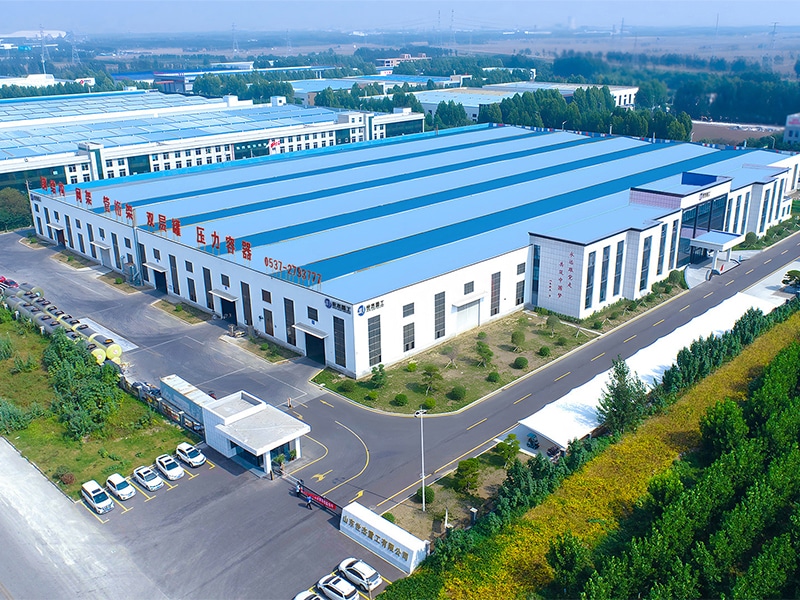
Our practice: Many of the industrial plants and public buildings we have constructed, after 20-30 years of use, have maintained structural performance exceeding 95% of the design standards according to third-party testing and evaluation. This is thanks to our full life-cycle quality management system, which considers long-term usage needs from the design stage.
Why do our steel-structured buildings have a longer lifespan?
- Design Phase: We adopt a life-cycle cost design philosophy, considering not only initial construction costs but also minimizing long-term maintenance expenses and extending service life. We establish digital health records for each project to achieve precise maintenance.
- Material Selection: We have established strategic partnerships with top domestic steel mills to ensure controllable material quality at the source. Simultaneously, we have established a material traceability system, allowing each batch of steel to be traced back to its production furnace number.
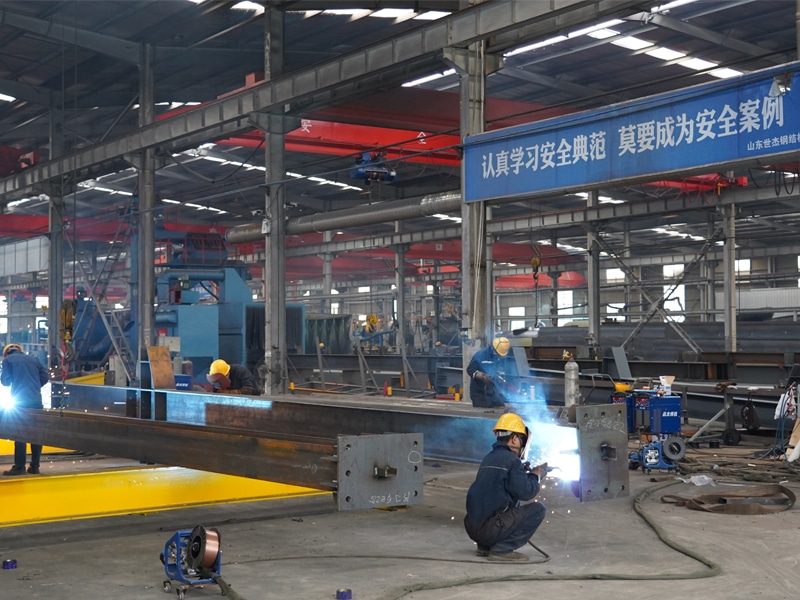
- Manufacturing Process: Our intelligent manufacturing base is equipped with industry-leading pre-processing, cutting, welding, and painting equipment to ensure the manufacturing precision and protective quality of every component.
- Maintenance System: We provide lifetime maintenance services and regular health checks for our clients. Through IoT monitoring technology, we monitor the structural status in real time to achieve preventative maintenance.
Comparison with Other Structural Forms
Compared to reinforced concrete structures, steel structures generally have better seismic performance and repairability; compared to wood structures, steel structures are more fire-resistant and insect-resistant; compared to masonry structures, steel structures are lighter, stronger, and easier to modify. These characteristics give steel structures a unique advantage in extending building life.
Our steel structure buildings are designed with future functional changes in mind from the initial design phase. They utilize flexible, open layouts and standardized connection systems, enabling the building to adapt to various usage needs throughout its lifespan and preventing premature aging due to functional obsolescence.
How to maximize the lifespan of steel structures?
- Design Phase: Fully consider environmental corrosivity and load characteristics, selecting appropriate anti-corrosion solutions and structural details.
- Construction Phase: Strictly control material quality, welding processes, and coating application.
- Usage Phase: Regular inspections, especially of critical nodes and coating condition.
- Maintenance Phase: Promptly repair damaged coatings and replace severely corroded components.
Our Integrated Solution: From design, manufacturing, and installation to post-construction maintenance, we provide end-to-end services and have developed a dedicated steel structure health monitoring platform to provide clients with real-time structural safety assessments and maintenance recommendations.
Conclusion: Choosing us means choosing longevity.
The lifespan of a steel structure building is not a fixed number, but a variable closely related to the entire process of design, construction, use, and maintenance. A 50-year design lifespan is a conservative benchmark. In reality, through scientific design, rigorous construction, and meticulous maintenance, steel structure buildings can achieve a lifespan of 100 years or even longer.
As a leading steel structure system service provider, we promise: we deliver not just standard-compliant steel structure buildings, but enduring, timeless foundations. We use materials that exceed standards, our processes are more refined than usual, and our services extend beyond the contract.
In our completed projects, over 95% of the structures, after more than 15 years of use, still outperform design expectations. This stems from our dedication to every detail: from the pretreatment of steel plates to every step of the painting process, from non-destructive testing of welds to the precise tightening of bolts.
With advancements in materials science and the development of testing and maintenance technologies, the lifespan of steel structure buildings will be further extended in the future. We will continue to invest in research and development, applying the latest weather-resistant materials, intelligent monitoring, and green protection technologies to our products to create longer-lasting value for our customers.
Choosing our 鉄骨構造 buildings means gaining not only a current spatial solution, but also an asset that can be passed down through generations and a trustworthy partner. Let us work together to create truly meaningful “century-old buildings” that will witness and transcend time.


MORE PROJECTS