Steel Structure Bridges – A Powerful Link in Modern Transportation

Bridges are crucial structures for humankind, spanning mountains, rivers, lakes, and seas, connecting two places. Among the many types of bridges, steel structure bridges, with their superior performance and distinct contemporary characteristics, play an irreplaceable role in modern transportation infrastructure networks. They are not only a combination of strength and beauty but also a significant symbol of engineering and technological progress.Steel Structure

I. Definition and Core Characteristics

Steel structure bridges primarily refer to bridges whose main load-bearing structures (such as spans, piers, arch ribs, and towers) are made of steel and connected by welding, riveting, or bolting. The steel used is mainly high-strength low-alloy steel, possessing excellent mechanical properties.

Its core advantages are:

· High Strength and Lightweight: Steel has extremely high tensile and compressive strength, far surpassing that of concrete and stone. Under the same load, steel components have smaller cross-sections and are lighter in weight, making it possible to construct long-span bridges and reducing the burden on the foundation and substructure.

  • Excellent plasticity and toughness: Steel’s good plasticity allows it to deform significantly under overload without sudden fracture, providing time for safety warnings. Its toughness effectively resists impact, fatigue loads, and a certain degree of seismic action.
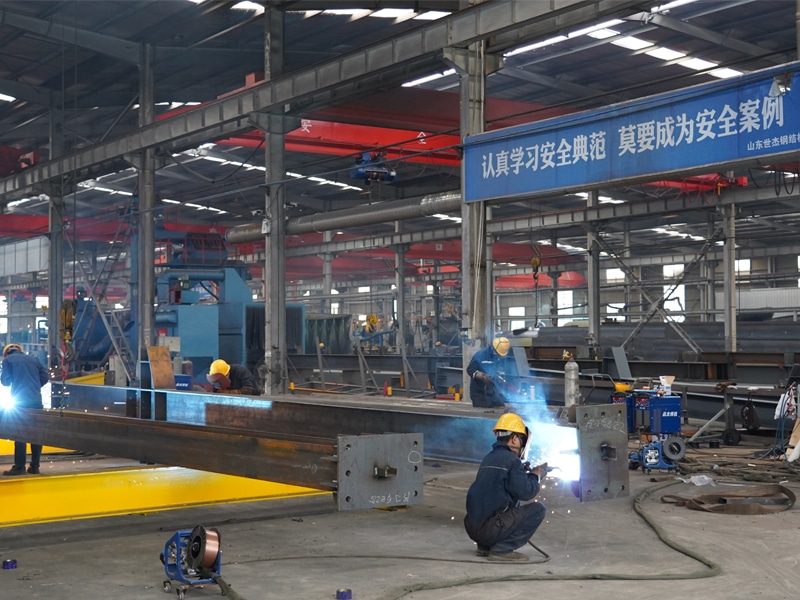
  • Convenient construction and high degree of industrialization: Steel components can be precisely prefabricated in factories, making quality control easy. On-site installation mainly involves splicing, resulting in rapid construction, less impact from climate and seasons, significantly shortening the construction period, and minimizing disruption to existing traffic and the environment. Modular construction methods (such as incremental launching and rotational construction) are a key feature.
  • Suitable for long-span bridges: Due to its lightweight and high-strength properties, steel structures are the primary material choice for long-span bridge types (main spans can reach several kilometers) such as suspension bridges, cable-stayed bridges, and arch bridges, as seen in famous examples like the Akashi Kaikyo Bridge and the Hong Kong-Zhuhai-Macau Bridge.

II. Main Applications and Classic Bridge Types

Steel structure bridges have a wide range of applications and diverse forms:

  1. Long-span Bridges:
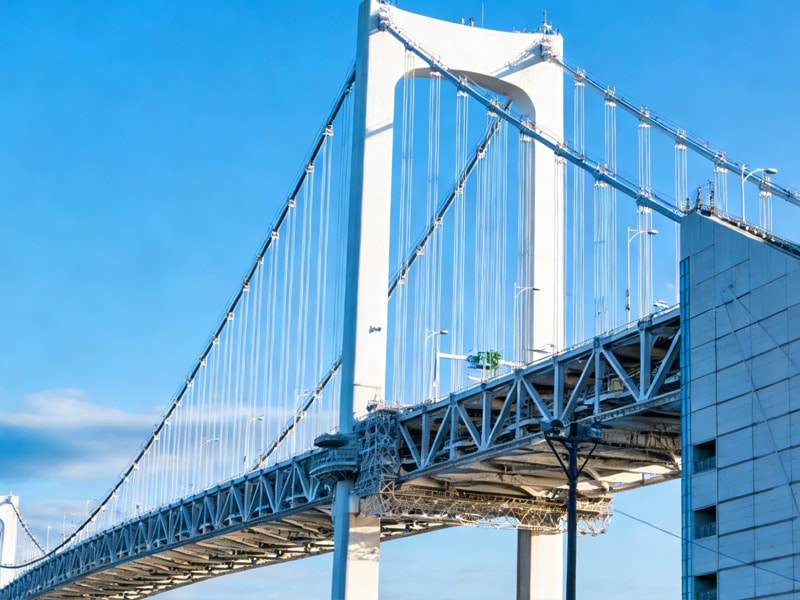
  • Suspension Bridges: These bridges utilize main cables and suspenders to support the bridge deck, such as the Xihoumen Bridge in China (main span 1650 meters), where both the main cables and stiffening girders are steel structures.
  • Cable-stayed Bridges: These bridges transfer the deck load to the towers via cable stays, such as the Nanjing Yangtze River Bridge (partial) and the Sutong Yangtze River Bridge, where the towers and steel box girders are key steel structures.
  • Arch Bridges: Especially tied arch bridges and truss arch bridges, such as the Chongqing Chaotianmen Yangtze River Bridge (main span 552 meters), where the massive arch ribs and bridge deck system are all steel structures.
  1. Urban Interchanges and Overpasses: Due to their rapid construction and minimal traffic disruption, steel box girders and steel truss girders are widely used in urban expressways and highway interchanges and overpasses.
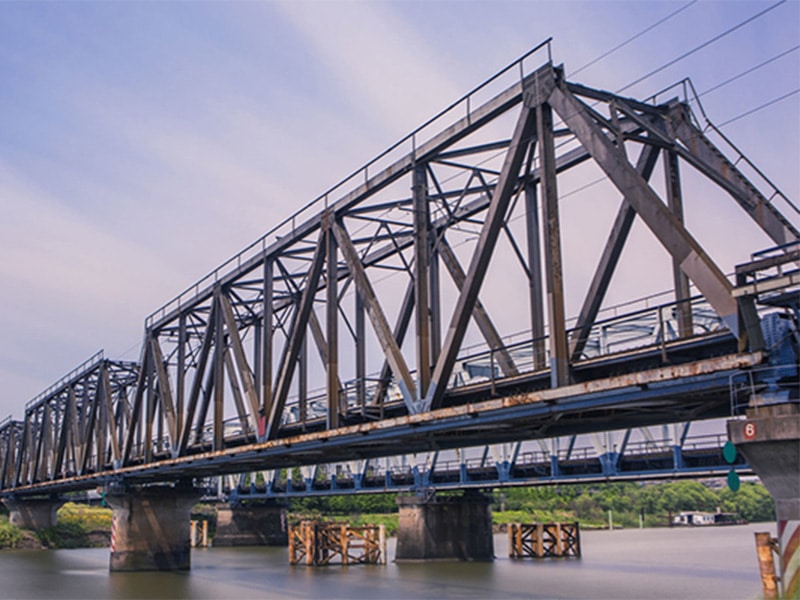
  2. Railway Bridges: Especially high-speed railway bridges, which have extremely high requirements for rigidity, stability, and durability, widely employ steel truss girders and steel box girder composites to meet the demands of high-speed, stable train operation.
  3. Temporary or Demountable Bridges: In military, disaster relief, or temporary engineering projects, prefabricated steel bridges (such as Bailey bridges) play a crucial role in the rapid construction of passageways.

III. Challenges and Key Technologies

Despite their significant advantages, steel structure bridges also face some inherent challenges, driving the continuous development of related technologies:

  • Corrosion and Fire Protection: Steel is susceptible to atmospheric and environmental corrosion and has poor fire resistance. Modern engineering primarily utilizes high-performance anti-corrosion coatings, thermal metal spraying (such as zinc or aluminum spraying), weathering steel, and intelligent dehumidification systems for long-term protection. Fire protection relies on fire-retardant coatings or fire-resistant cladding.
  • Fatigue and Stability: Under long-term alternating loads (such as traffic flow), fatigue cracks are prone to develop in welds or at key points. Refined fatigue-resistant design, manufacturing process control, and health monitoring systems are crucial. Meanwhile, thin-walled steel components are susceptible to localized instability, requiring stiffening ribs and other structural elements to ensure overall stability.
  • Connection Node Design: The reliability of nodes directly impacts the safety of the entire bridge. Modern designs emphasize node ductility, redundancy, and ease of inspection, widely employing high-strength bolt friction connections.
  • Maintenance and Management: Life-cycle costs are increasingly important. Establishing a comprehensive health monitoring system (SHM) to monitor stress, deformation, vibration, and corrosion in real time, enabling predictive maintenance, is the future direction for ensuring long-term safe operation.

IV. Future Development Trends

Looking to the future, the development of steel structure bridges exhibits the following trends:

  • Material Innovation: The application of new steel materials with higher strength, better toughness, better weather resistance, and seismic performance (such as high-performance steel and stainless steel composite plates) will further enhance the economy and durability of bridges.
  • Intelligent Construction: Deep integration of technologies such as Building Information Modeling (BIM), digital twins, robotic automated welding and installation, and 3D printing to achieve full-process digitalization and intelligentization of design, manufacturing, construction, and operation and maintenance.
  • Green and Sustainable Development: Emphasis on the recyclability of steel (extremely high recycling rate), promotion of life cycle assessment (LCA), and reduction of resource consumption and environmental impact. Prefabricated construction itself is also an important manifestation of green construction.
  • Structural Innovation: Combining new materials and technologies to explore lighter, more efficient, and more aesthetically pleasing hybrid structures (such as steel-concrete composite structures and steel-composite material composites) and new structural systems.

Conclusion

Steel structure bridges, as outstanding representatives of modern civil engineering, support humanity’s grand dream of bridging natural barriers with their inherent strength, lightness, and toughness. From mega-projects spanning rivers and bays to convenient urban networks facilitating daily travel, they continuously demonstrate the power of steel and the wisdom of engineering. Facing future challenges, through continuous technological innovation and lean operation and maintenance management, steel structure bridges will continue to serve as a sturdy backbone, carrying the wheels of social development and soaring across an even more magnificent era.

sdshijieを選ぶ理由

カスタム・メタル・ストラクチャーの構築は私たちの専門分野です。

さんぼうとうごう

製造と貿易を統合することで、生産効率が向上し、価格競争力が高まる。.

経験豊富な営業チーム

Our sales team grasps your needs and delivers cost-effective solutions.

厳格な品質保証

生産から納品まで何度も検査を行い、厳格な品質管理を行っている。.

テーラード・ソリューション

プロジェクトの規模や構造上の要求に基づいて、独自のカスタマイズされたソリューションを提供する。.

国際規格

さまざまな国際認証を取得しており、製品の品質は世界標準に準拠している。.

迅速な配達

リードタイムを短縮するため、生産と納品を迅速に手配する。.

プロフェッショナル・テクニカル・サポート

複雑な建設・据付プロセスを簡素化するための的確な技術的ソリューションを提供する。.

長期的な協力関係を築く

長期的な協力関係を重視し、顧客の信頼を獲得し、安定した長期的なパートナーシップを構築する。.

アフターサービス

年中無休、迅速な対応、設置に関する問題の迅速な解決。.