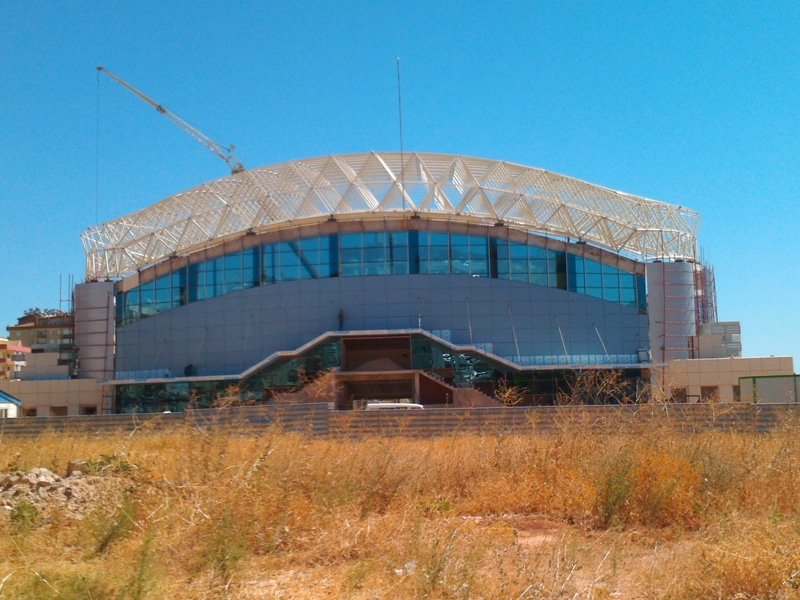
¿Merece la pena pagar un precio más alto por un acero de mayor calidad en la construcción metálica?
In the planning and construction of metal buildings, material selection is often a key factor determining the success or failure of a project. Steel, as the core material of metal buildings, varies significantly in quality and price. Faced with steel options at different price points on the market, many project decision-makers consider a core question: Is it truly worth paying a higher price for higher quality steel? 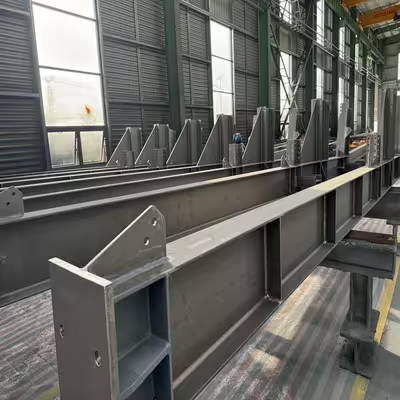
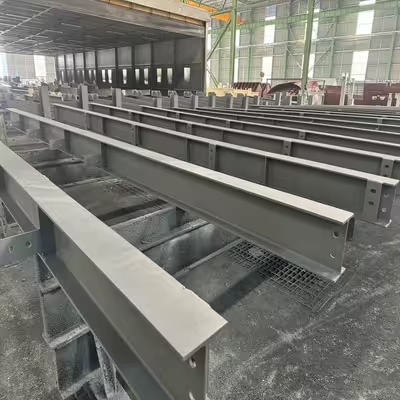
To answer this question, we need to comprehensively weigh multiple dimensions, including technical, economic, and long-term benefits.
I. Core Advantages of High-Quality Steel
- Strength and Durability
High-quality steel typically has higher yield strength and tensile strength, enabling it to withstand greater loads and harsher environmental conditions.
In areas prone to extreme weather (such as strong winds, heavy snow, and earthquakes), high-strength steel can significantly improve the safety factor of buildings.
- Corrosion Resistance
· High-quality steel often employs better anti-corrosion treatments, such as hot-dip galvanizing, alloy coatings, or special coating technologies.
In humid, coastal, or heavily industrially polluted environments, corrosion-resistant steel can significantly extend building lifespan and reduce maintenance frequency and costs.
- Dimensional Accuracy and Consistency
High-quality steel undergoes stricter quality control during manufacturing, resulting in smaller dimensional tolerances and fewer surface defects.
This is particularly important for highly prefabricated metal buildings, improving construction efficiency and reducing on-site adjustments and waste.
- Weldability and Machinability
High-quality steel typically has a more stable chemical composition and microstructure, making it less prone to defects such as cracks and porosity during welding.
Good machinability reduces manufacturing difficulty and improves finished product quality.
II. Cost-Benefit Analysis: More Than Just Initial Price
- Life Cycle Cost Perspective
Initial Cost: High-quality steel is typically 10%-50% more expensive, depending on the steel grade and purchase quantity.
Maintenance Cost: Low-quality steel may require more frequent corrosion protection maintenance, repairs, or even partial replacements; the long-term accumulated costs may far exceed the initial price difference.
Lifespan: High-quality steel can extend a building’s lifespan by 20-50%, or even more, effectively reducing annual operating costs.
- Insurance and Financing Impact:
Using high-quality steel may lower insurance rates, as insurance companies consider the building’s enhanced safety and durability.
Financial institutions may also offer more favorable loan terms to projects using high-quality materials when assessing project financing.
- Operational Interruption Costs:
For productive buildings such as industrial plants and logistics centers, losses from downtime due to maintenance can far outweigh the cost of upgrading materials.
III. Decision-Making Framework and Recommendations
For specific projects, the following decision-making process is recommended:
- Risk Assessment: Analyze the environmental risks and usage requirements of the building’s location.
- Life Cycle Cost Analysis: Calculate the total cost of different quality steels over their expected service life.
- Performance Requirement Matching: Determine which performance indicators (strength, corrosion resistance, etc.) must be met.
- Budget Constraint Balancing: Finding the Optimal Balance Between Performance Requirements and Budget Limitations
- Supplier and Technology Evaluation: Selecting Reputable Suppliers and Required to Provide Quality Certificates and Performance Data
IV. Expert Opinions and Case Studies
Many engineering experts believe that investing in high-quality steel is almost always worthwhile for load-bearing structures and components exposed to harsh environments. A typical example is a coastal logistics center that initially used ordinary steel; within 10 years, maintenance costs due to corrosion reached three times the initial steel cost. In contrast, a similar building using high-quality weathering steel during the same period required only routine inspections after 20 years.
However, some engineers point out that in some cases, proper design is more effective than simply upgrading material grades. For example, optimizing structural design to reduce stress concentration, combined with medium-quality steel, can also meet safety requirements.
Conclusión
Is it worth paying a higher price for higher-quality steel? The answer is: it depends on the specific circumstances, but in most permanent metal buildings, a moderate investment in higher-quality steel is generally a wise long-term decision.
The key is not blindly choosing the most expensive or cheapest option, but making rational choices based on sufficient information and a full life-cycle consideration. For most projects, medium-to-high quality steel often offers the best balance of cost and performance, ensuring safety and durability without incurring unnecessary initial costs.
Ultimately, steel selection for metal buildings should follow a fundamental principle: optimizing total life-cycle costs while meeting safety and durability requirements, rather than simply minimizing initial investment. Within this framework, paying a reasonable premium for higher-quality steel often translates into lower long-term ownership costs, greater safety, and more sustainable building value.
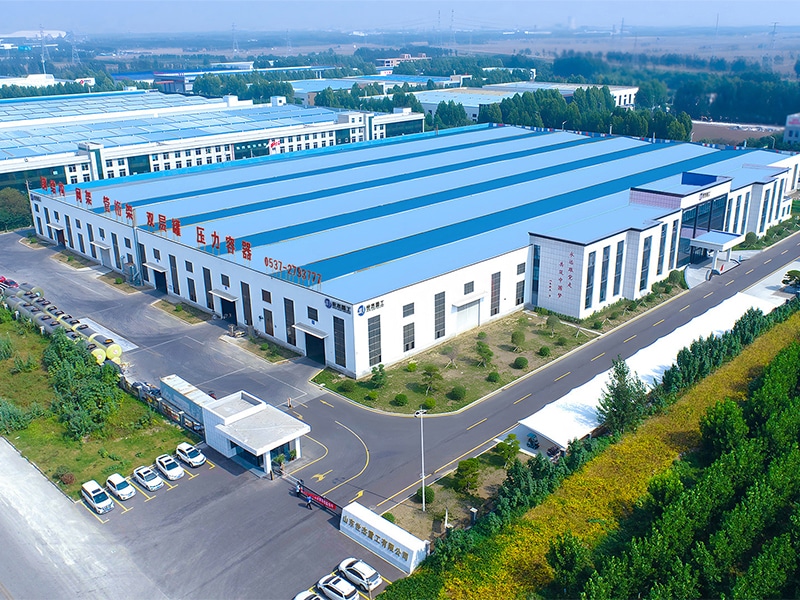
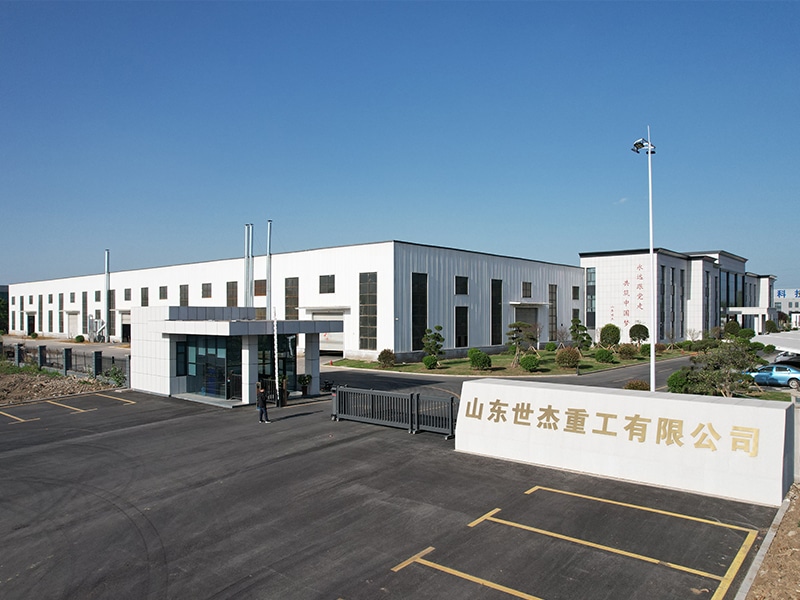

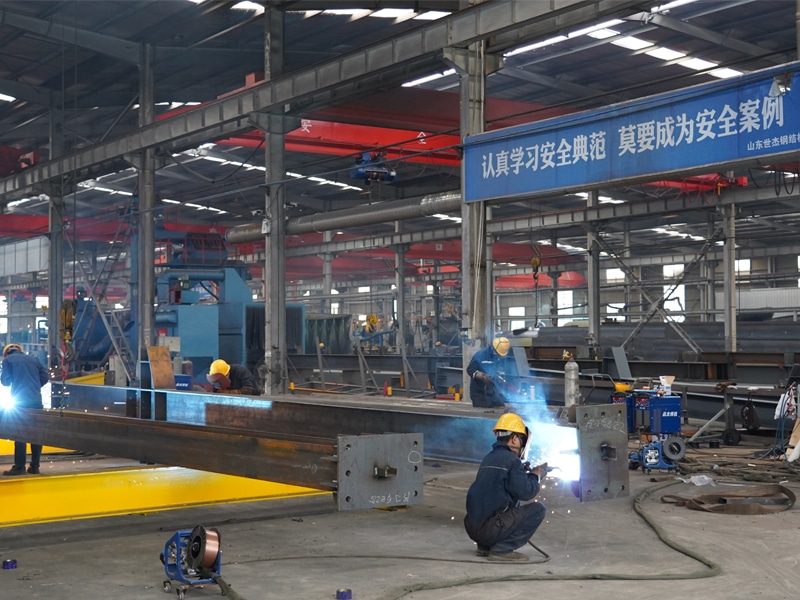
¿POR QUÉ ELEGIR sdshijie?
La construcción de estructuras metálicas a medida es nuestra especialidad.
Más proyectos