Umfassende Kostenanalyse von Stahlkonstruktionsgebäuden: Ein Leitfaden für Käufer zur Bewertung
Wenn Sie den Bau einer Stahlkonstruktion Die wichtigste Frage beim Bau eines Gebäudes ist zweifellos: “Wie viel wird das eigentlich kosten?” Die wirkliche Antwort ist jedoch viel komplexer als eine einfache Zahl. Dieser Artikel soll Ihnen einen klaren und transparenten Rahmen für die Kostenstruktur bieten, der Ihnen hilft, alle Schlüsselfaktoren zu verstehen, die Ihre endgültige Investition beeinflussen, und Sie in die Lage versetzt, fundierte Entscheidungen zu treffen.
Die Kosten verstehen: Warum gibt es keinen “Standardpreis”?
Die erste grundlegende Erkenntnis, die gewonnen werden muss, ist, dass es keine “Standardpreisliste” für Stahlkonstruktionen gibt, die für alle Projekte gilt. Jedes Gebäude ist einzigartig, und seine endgültigen Kosten sind das Ergebnis des dynamischen Zusammenspiels mehrerer Variablen. Der Versuch, einen vorgefertigten Einheitspreis aus dem Internet oder aus den Erfahrungen anderer zu ermitteln, führt oft zu erheblichen Budgetabweichungen oder Unstimmigkeiten bei den Projektspezifikationen.
Die Gesamtkosten werden in erster Linie durch die folgenden Dimensionen bestimmt:
- Funktion und Gestaltung des Gebäudes: Handelt es sich um ein einfaches Lager für Waren oder um einen Lebensmittelbetrieb, der eine präzise Temperaturkontrolle erfordert? Handelt es sich um einen Bahnhof mit einem großflächigen, stützenfreien Raum oder um ein mehrstöckiges, kreatives Büro-Loft? Die Funktion bestimmt die Komplexität des Entwurfs.
- Maßstab und Abmessungen: Gebäudefläche, Spannweite, Traufhöhe, Vorhandensein eines Zwischengeschosses, usw.
- Geografischer Standort: Arbeitskosten, Materialtransportentfernungen, geologische Bedingungen (die sich direkt auf die Gründungskosten auswirken) und örtliche Vorschriften sind von Region zu Region unterschiedlich.
- Material- und Prozessstandards: Stahlqualität und -festigkeit, Korrosionsschutzbeschichtung, Verkleidungsstärke und Kernmaterial, Tür- und Fensterkonfiguration usw.
- Marktumfeld: Preisschwankungen bei Rohstoffen (z. B. Stahl), Veränderungen bei Angebot und Nachfrage während der Haupt- und Nebensaison.
Aufschlüsselung der Kernkostenmodule: Wohin fließt Ihre Investition?
Um Ihr Budget zu kontrollieren, müssen Sie die Bestandteile der Gesamtkosten kennen. Im Folgenden finden Sie eine vollständige Kostenaufstellung für den Bau einer Stahlkonstruktion von Grund auf:
- Entwurf und Vorarbeiten
Dies ist die Entwurfsphase des Projekts. Obwohl der Kostenanteil nicht hoch ist, bestimmt er die Effizienz und Rationalität aller nachfolgenden Investitionen.
- Entwurfsgebühren: Umfasst die strukturelle Planung, den architektonischen Entwurf und die Konstruktionszeichnungen. Komplexe Projekte oder solche, die Genehmigungen erfordern, verursachen höhere Kosten.
- Gebühren für geologische Untersuchungen: Die Beschaffung zuverlässiger Bodendaten ist von grundlegender Bedeutung für eine sichere und wirtschaftliche Gründungsplanung.
- Gebühren für Genehmigungen und Zulassungen: Verschiedene Verwaltungsgebühren, die je nach den örtlichen Vorschriften anfallen können.
- Fundament- und Unterbaukonstruktion
Dies ist der Teil, der die Baupläne im Boden verankert. Seine Kosten werden stark von den geologischen Bedingungen beeinflusst und sind der variabelste Teil des Budgets.
- Erdarbeiten: Aushub, Aufschüttung und Nivellierung.
- Betonfundament: Einschließlich Bewehrung, Schalung, Gießen und Aushärten von Fundamentkappen und Bodenbalken.
- Eingebettete Komponenten: Präzise eingebettete Ankerbolzen und andere Verbindungselemente.
Wichtiger Hinweis: Übertriebene Kosteneinsparungen im Grundbau können zu Setzungen oder Rissen im Gebäude führen, die extrem hohe Nachbesserungskosten verursachen.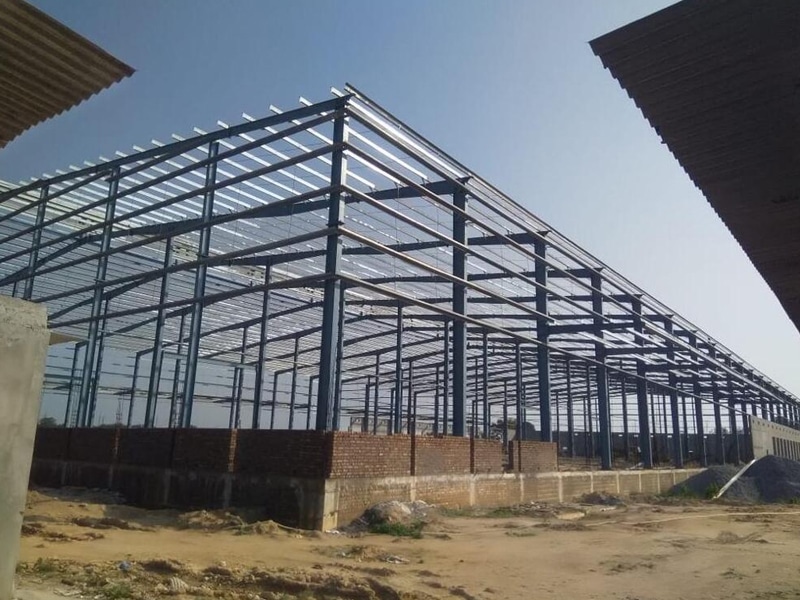
- Hauptstahlkonstruktion
Dies ist das Skelett des Gebäudes und der Kern der “Stahlstruktur”.”
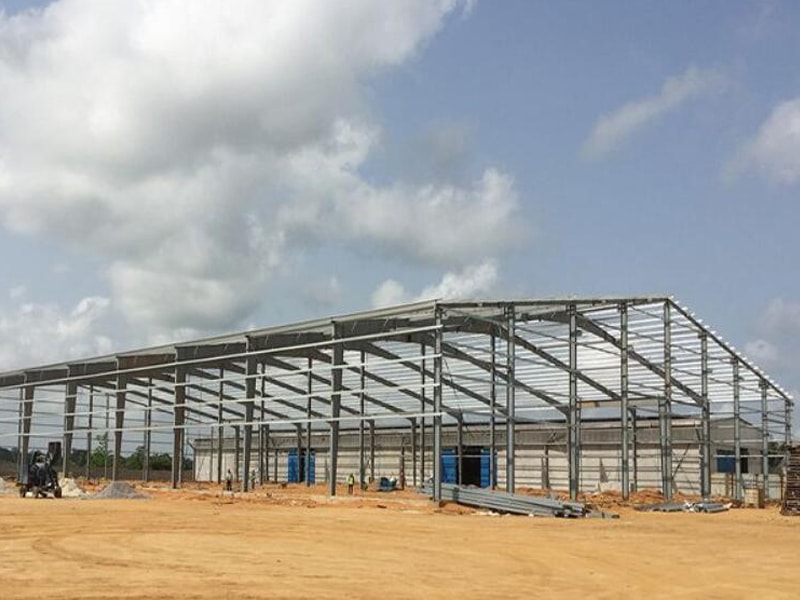
- Lieferung und Verarbeitung von Hauptstahlkomponenten: Umfasst wichtige tragende Komponenten wie Stahlsäulen, Stahlträger und Fachwerkbinder. Die Kosten hängen von der Menge des verwendeten Stahls, den Querschnittsabmessungen, der Komplexität der Verarbeitung und den Standards für die Oberflächenbehandlung (z. B. Sandstrahlen, Grundierung und Decklackierung) ab.
- Sekundäres Struktursystem: Umfasst Pfetten, Wandträger und Verstrebungen, die die Stabilität der Hauptstruktur gewährleisten und das Überdachungssystem unterstützen.
- Installation und Anheben: Kosten für die Installation vor Ort durch ein professionelles Team, einschließlich der Kosten für die Nutzung von Maschinen (z. B. Kran).
- System der Einschließung
Dies ist die “Haut” des Gebäudes, die den Schallschutz, die Wärmedämmung, die Feuerbeständigkeit, die Wasserdichtigkeit und das Aussehen bestimmt.
- Dachdeckungssystem: Zu den Optionen gehören einlagige profilierte Stahlbleche (mit Isolierung) oder mehr integrierte Sandwich-Paneele (Kernmaterialien wie Steinwolle und Polyurethan, mit unterschiedlichen Feuerbeständigkeits- und Isolierungseigenschaften).
- Wand-System: Bietet ebenfalls eine Vielzahl von Paneeloptionen und umfasst Designs für Öffnungen wie Türen, Fenster, Oberlichter und Lüftungsschlitze.
- Randabschlüsse und Abdichtungen: Dachrinnen, Fallrohre und Randabschlüsse an Fugen; Details bestimmen die Haltbarkeit des Gebäudes.
- Hilfs- und Funktionssysteme
Dieser Teil gibt dem Gebäude seine eigentliche funktionale Nutzung und variiert oft stark je nach den spezifischen Bedürfnissen.
- Elektrisches System: Beleuchtung, Stromverteilung, Blitzschutz und Erdung.
- Wasserversorgungs- und Entwässerungssysteme: Innen- und Außenentwässerung, sanitäre Wasserversorgung.
- Feuerschutzsystem: Hydranten, Sprinkleranlagen und Alarmeinrichtungen entsprechend den Anforderungen an die Gefahrenstufe des Gebäudes.
- Unterstützende Einrichtungen für die Prozessausrüstung: Wie z. B. Kranhalterungen und -schienen, Lüftungs- und Entstaubungskanäle, Geräteplattformen usw.
- Innendekoration: Aufteilung und Dekoration von Büros, Toiletten und anderen Bereichen.
Fahrplan für Einkäufer: Wie man Lösungen beschafft und evaluiert
Wenn Sie die Kostenstruktur kennen, können Sie das Projekt professionell angehen:
- Definieren und dokumentieren Sie Ihren Bedarf: Erstellen Sie eine Anforderungsspezifikation, in der der Zweck des Gebäudes, die Abmessungen, der Platzbedarf im Inneren (z. B. Stehhöhe, Vorhandensein oder Fehlen von Säulen), die Ausrüstungslast, die Brand- und Dämmwerte, die Anforderungen an das Erscheinungsbild und künftige Erweiterungsmöglichkeiten klar definiert sind.
- Suchen Sie nach professionellem Design und vorläufigen Lösungen: Bevorzugen Sie Anbieter, die integrierte Designdienstleistungen anbieten können. Eine professionelle Designlösung, die auf Ihren Bedürfnissen basiert, ist die Grundlage für einen genauen Preisvergleich, der sicherstellt, dass alle Angebote auf gleicher Augenhöhe konkurrenzfähig sind.
- Holen Sie ein strukturiertes, transparentes Angebot ein: Die Angebote der Lieferanten müssen nach den oben genannten Kostenmodulen aufgeschlüsselt werden. Achten Sie beim Vergleich auf:
- Materialspezifikationen: Stahlsorte, Beschichtung, Blechdicke, Dichte des Kernmaterials und Feuerwiderstandsklasse.
- Umfang der Dienstleistungen: Beinhaltet das Angebot Entwurf, Transport, Installation, Unterstützung bei der Genehmigung und Kundendienst?
- Baunormen: Schweißverfahren, Korrosionsschutzverfahren und Normen für die Installationsgenauigkeit.
- Betrachten Sie die Gesamtbetriebskosten (Total Cost of Ownership): Die Option mit der niedrigsten Anfangsinvestition kann aufgrund höherer Wartungskosten, eines höheren Energieverbrauchs oder einer kürzeren Lebensdauer höhere Gesamtkosten verursachen. Bei der Bewertung sollten die Dauerhaftigkeit des Gebäudes, der Energieverbrauch im Betrieb und die Wartungsanforderungen umfassend berücksichtigt werden.
Schlussfolgerung: Investieren Sie in den Wert, nicht nur in die Tonnage.
Aufbau einer Stahlkonstruktion Ein Gebäude ist im Wesentlichen eine Investition in eine räumliche Lösung, die Ihre langfristigen funktionalen Bedürfnisse erfüllt. Bei den klügsten Ausgaben geht es nicht darum, den niedrigsten Anfangspreis zu erzielen, sondern ein sicheres, langlebiges, effizientes und preisgünstiges Qualitätsobjekt durch professionelle Planung, geeignete Materialauswahl und zuverlässige Konstruktion zu erhalten.
Sobald Sie die Logik hinter der Kostenaufschlüsselung verstanden haben, verwandeln Sie sich von einem passiven Fragesteller in einen versierten Käufer, der in der Lage ist, effektiv mit Fachleuten zu kommunizieren und gemeinsam Lösungen zu optimieren. Dieses Verständnis bildet die solideste Grundlage für den Erfolg Ihres Projekts.

WARUM SDHJIE WÄHLEN?
Der Bau maßgeschneiderter Metallkonstruktionen ist unsere Spezialität.
Weitere Projekte