Vergleichende Analyse von Stahlfertigteilen und kaltgeformten Stahlkonstruktionen
In der Welt der Architektur ist die Wahl eines Tragwerksystems wie die Wahl eines Gebäudeskeletts - es bestimmt die Form, die Kapazität und die Lebensdauer des Gebäudes. Viele Projektentscheider stehen vor einem Dilemma, wenn sie mit Stahlfertigteilkonstruktionen und kaltgeformten dünnwandigen Stahlkonstruktionen (leichte Stahlkonstruktionen) konfrontiert werden. In diesem Artikel wird ein neuer Entscheidungsrahmen aus der Perspektive der Projektgene vorgestellt.
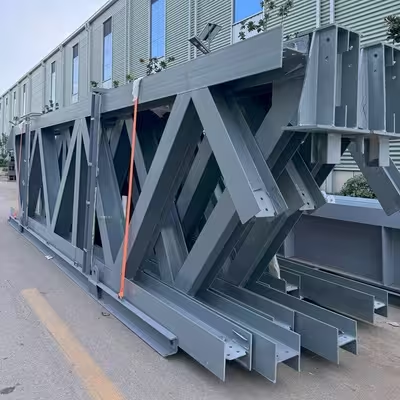
Die beiden Systeme neu verstehen: Mehr als nur ein Unterschied im Stahl
Vorgefertigte Stahlkonstruktionen: Das “schwere Skelett” der Gebäude
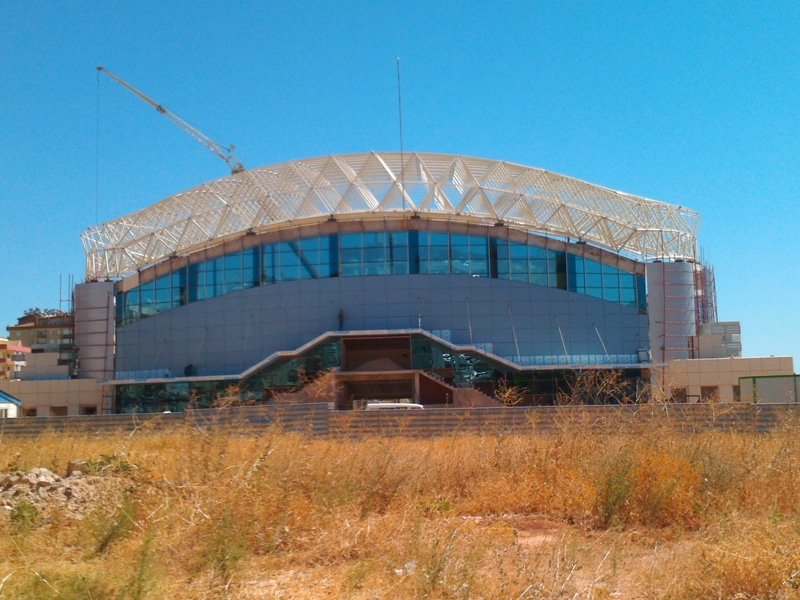
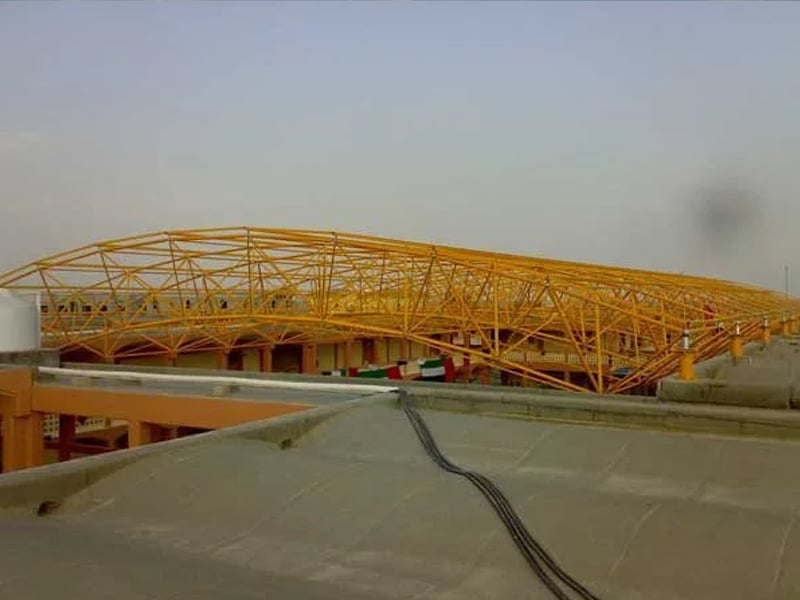
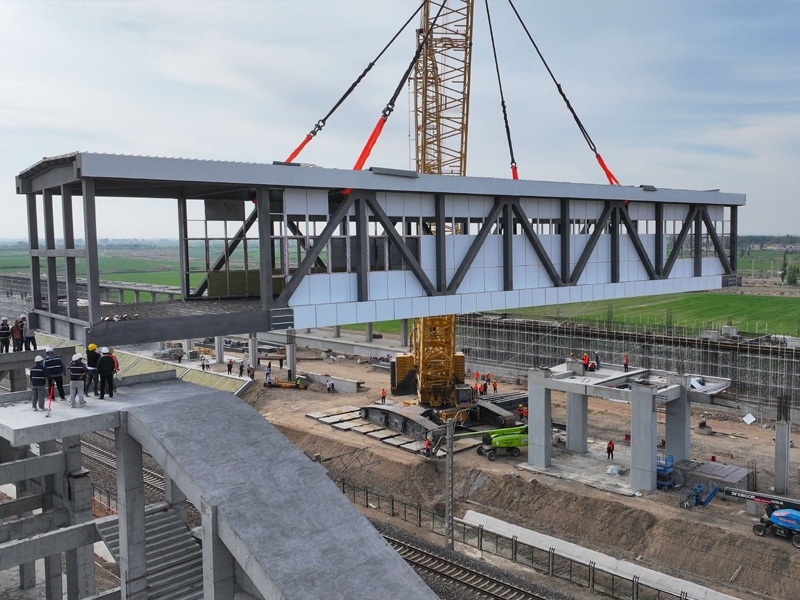
Vorgefertigte Stahlkonstruktionen sind hochbelastbare Stahlkonstruktionssysteme, die im Warmwalzverfahren hergestellt werden. Diese Stähle werden bei hohen Temperaturen zu H-, I- oder kastenförmigen Profilen geformt, die als “Hauptskelett” des Gebäudes fungieren und die schwere Verantwortung für die gesamte Lastübertragung tragen.
Kaltgeformte dünnwandige Stahlkonstruktionen: Die “Präzisionsrippen” des Bauens
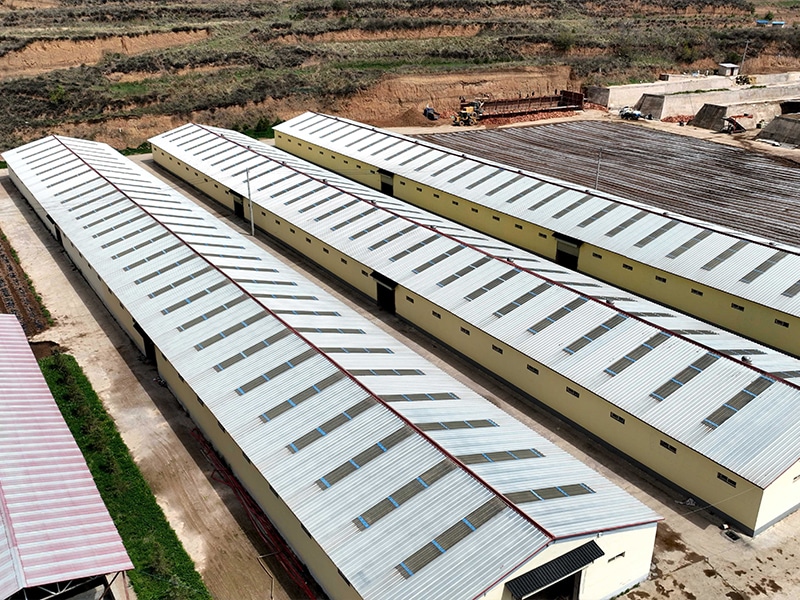
Kaltgeformter dünnwandiger Stahl ist ein leichtes Struktursystem, das durch Präzisionswalzen dünner Stahlplatten (in der Regel 0,5-3 mm) bei Raumtemperatur hergestellt wird. Es handelt sich eher um ein “Präzisionsrippennetz” von Gebäuden, das durch eine große Anzahl standardisierter Komponenten ein stabiles System bildet.
Neue Dimensionen der Entscheidungsfindung: Jenseits traditioneller Vergleiche
Dimension 1: Projekt “Lebenszyklus-Energieverteilung”
Energieverteilung bei Projekten mit vorgefertigten Stahlkonstruktionen:
- Entwurfs- und Herstellungsphase: Hoher Energieaufwand (detaillierte Planung, umfangreiche Fertigung)
- Transportphase: Mittlerer Energieaufwand (Transport von Großkomponenten)
- Vor-Ort-Installation: Relativ effizient (schnelles Heben von großen Komponenten)
- Betriebsphase: Geringer Energieaufwand für die Wartung (hohe Langlebigkeit)
- Demontage und Recycling: Hochwertiges Recycling (Stahl ist vollständig recycelbar)
Energieverteilung von kaltgeformten dünnwandigen Stahlkonstruktionen:
- Entwurfs- und Herstellungsphase: Mittlerer Energieaufwand (standardisiertes Design, Präzisionsfertigung)
- Transportphase: Geringer Energieaufwand (kompakte Verpackung, leichter Transport)
- Vor-Ort-Installation: Äußerst effizient (manuelle Handhabung, schnelle Montage)
- Betriebsphase: Mittlerer Wartungsaufwand (kann mehr Wartung erfordern)
- Demontage und Recycling: Hocheffizientes Recycling (Materialien sind 100%-recyclingfähig)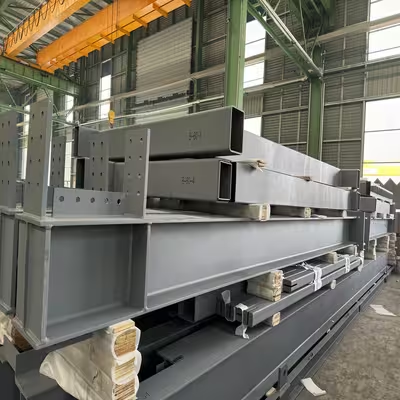
Dimension 2: Projekt “Ungewissheitstoleranz”
Projekte mit hoher Ungewissheit (Anforderungen können sich ändern, Funktionen können angepasst werden):
- Erhebliche Vorteile von Stahlfertigteilkonstruktionen: Große Zwischenräume und weniger Stützenraster bieten Flexibilität für zukünftige Nachrüstungen
- Kaltgeformte, dünnwandige Strukturen haben viele Einschränkungen: zahlreiche tragende Wände und Trennwände, die die räumliche Umgestaltung einschränken.
Für Projekte mit geringer Unsicherheit (klare Funktionen, stabile Nachfrage):
- Kaltgeformte, dünnwandige Konstruktionen sind außerordentlich leistungsfähig: Sie entsprechen genau dem Bedarf und vermeiden eine “Überplanung”.”
- Vorgefertigte Stahlkonstruktionen können eine “übermäßige Kapazität” haben: zusätzliche Kosten für unnötiges Potenzial.
Dimension Drei: Die “Zeitwertkurve” des Projekts”
Für Projekte mit hohem Zeitwert (frühe Fertigstellung, früher Nutzen):
- Kaltgeformte dünnwandige Strukturen bieten erhebliche Vorteile: Die Vorfertigung außerhalb der Baustelle kann bis zu 85% erreichen, und die Baugeschwindigkeit vor Ort ist 30-50% schneller als bei herkömmlichen Methoden.
- Bei Stahlfertigteilkonstruktionen gibt es auch Beschleunigungsmöglichkeiten: modulare Vorfertigung, aber die Kosten steigen entsprechend.
Für Projekte mit mäßigem Zeitwert:
- Vorgefertigte Stahlkonstruktionen können in einem herkömmlichen Tempo ausgeführt werden, wodurch das Gleichgewicht zwischen Kosten und Qualität optimiert wird.
Versteckte Kosten: Leicht zu übersehende Faktoren
Kosten der technischen Koordinierung
Vorgefertigte Stahlkonstruktionen erfordern oft die Koordination mit großen Anlagen und komplexen Rohrleitungssystemen, was zu hohen Kosten für die Planungskoordination führt.
Kaltgeformte, dünnwandige Konstruktionen hingegen sind in hohem Maße mit den Systemen im Gebäudeinneren integriert, was geringere Kosten für die Koordinierung des Innenausbaus mit sich bringt, aber ein eigenes Planungsteam erfordert. Kosten der Klimaanpassung
Bei hohen Temperaturen, hoher Luftfeuchtigkeit oder in korrosiven Umgebungen:
- Stahlfertigteilkonstruktionen: erfordern dickere Beschichtungen oder höherwertigen Stahl
- Kaltgeformte dünnwandige Konstruktionen: erfordern strengere Abdichtungs- und Feuchtigkeitsschutzmaßnahmen
Kosten für Erweiterung und Nachrüstung
Wenn in 10 Jahren eine Erweiterung erforderlich ist:
· Vorgefertigte Stahlkonstruktionenrelativ einfach mit neuen Strukturen zu verbinden
- Kaltgeformte dünnwandige Konstruktionen: können eine unabhängige Erweiterung oder komplexe Verbindungen erfordern
Aufkommende Trends: Die moderne Entwicklung von zwei Systemen
Die “Leichtbau-Revolution” der Stahlfertigteilkonstruktionen
Moderne Stahlfertigteile sind nicht mehr das traditionelle Symbol für “sperrig”. Durch die Verwendung von hochfestem Stahl und eine optimierte Konstruktion können moderne Stahlfertigteilkonstruktionen 20-30% leichter sein als herkömmliche Lösungen und dringen in das Gebiet ein, das ursprünglich zu den leichten Stahlkonstruktionen gehörte.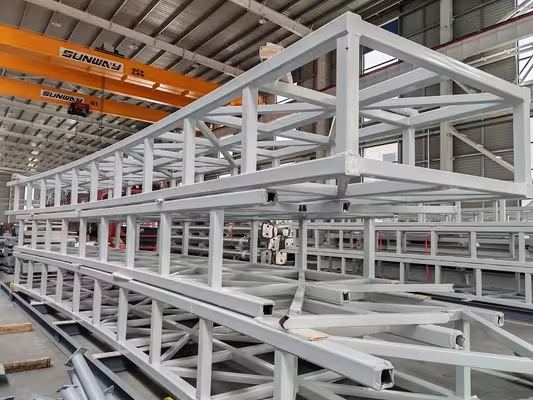
Der “Hochhaus-Durchbruch” von kaltgeformten dünnwandigen Konstruktionen
Durch innovative Verbindungstechniken und hybride Konstruktionen wurden kaltgeformte, dünnwandige Strukturen erfolgreich für 8- bis 10-stöckige mittelhohe Gebäude eingesetzt, wodurch die ursprünglichen Höhenbeschränkungen aufgehoben wurden.
Unterschiede beim digitalen Empowerment
Beide Systeme profitieren von der BIM-Technologie, allerdings auf unterschiedliche Weise:
- Vorgefertigte Stahlkonstruktionen: BIM wird in erster Linie zur Koordinierung großer Bauteile und komplexer Systeme eingesetzt.
- Kaltgeformte dünnwandige Strukturen: BIM steuert direkt die Fertigung und ermöglicht “Design als Produktion”.
Entscheidungsmatrix: Profilierung Ihres Projekts
Bewerten Sie Ihr Projekt anhand der folgenden sechs Aspekte (jeweils 1-5 Punkte):
- Anforderungen an die räumliche Freiheit (Brauchen Sie große Räume und wenige Säulen?)
- Terminsensitivität (Wie hoch ist der Wert einer vorzeitigen Fertigstellung?)
- Budgetsensibilität (Wie streng ist das ursprüngliche Budget?)
- Zukünftige Unsicherheit (Wird sich die Funktionalität ändern?)
- Gewicht der Nachhaltigkeit (Wie wichtig sind die Umweltanforderungen?)
- Lokale technische Fähigkeiten (Welche Arten von qualifizierten Teams sind vor Ort verfügbar?)
Die Wertung tendiert zu Stahlfertigteilkonstruktionen, wenn: Räumliche Freiheit (4-5 Punkte), zukünftige Ungewissheit (4-5 Punkte), lokale technische Möglichkeiten (Vorteile von Stahlbetonfertigteilen)
Die Wertung tendiert zu kaltgeformten, dünnwandigen Strukturen, wenn: Terminsensitivität (4-5 Punkte), Budgetsensitivität (4-5 Punkte), Nachhaltigkeitsgewicht (4-5 Punkte)
Weg der Innovation: Eine dritte Option
Moderne Projekte müssen nicht entweder das eine oder das andere sein. Hybride Struktursysteme sind für viele Projekte die optimale Lösung:
“Modell ”Stahlbetonrahmen + kaltgeformte dünnwandige Ausfachung
- Der Hauptrahmen aus vorgefertigtem Stahl bietet reichlich Platz und eine hohe Tragfähigkeit.
- Kaltgeformte dünnwandige Ausfachungen für Innentrennwände und Sekundärkonstruktionen verbessern Präzision und Geschwindigkeit.
“Phasenbasierte hybride” Strategie
- Schnell zu errichtende kaltgeformte dünnwandige Ausfachungsstrukturen erfüllen den dringenden Bedarf in Phase I.
- Für den Ausbau und die Modernisierung in Phase II werden vorgefertigte Stahlkonstruktionen verwendet.
“Leistungsorientierte hybride” Lösung
- Stahlfertigteile werden für primäre Tragsysteme wie Erdbeben- und Windwiderstand verwendet.
- Kaltgeformte, dünnwandige Ausfachung für nicht tragende und innere Bauteile.
Ihr Projekt, Ihre Wahl
Bei der Auswahl eines Tragwerkssystems gibt es keine absolut richtige oder falsche Wahl, sondern nur die am besten geeignete. Wir empfehlen, Entscheidungen auf der Grundlage der folgenden Schritte zu treffen:
- Definieren Sie Ihren Kernwert: Was ist der nicht verhandelbare Aspekt Ihres Projekts?
- Zeichnen Sie eine vollständige Kostenkurve: einschließlich Planung, Bau, Betrieb, Umbau und Abriss.
- Bewerten Sie das lokale Ökosystem: Welches System hat in Ihrer Region eine ausgereiftere Lieferkette?
- Berücksichtigen Sie zukünftige Möglichkeiten: Wie viel Flexibilität sollte für unvorhergesehene Änderungen reserviert werden? 5. Visualisierung des Ergebnisses: Stellen Sie sich den möglichen Zustand des Gebäudes in 10 und 20 Jahren vor.
Die Wahl der Gebäudestruktur läuft letztlich auf eine Wertentscheidung hinaus: Neigen wir zu dauerhafter Solidität oder flexibler Anpassung? In gegenwärtige Perfektion investieren oder zukünftige Möglichkeiten bewahren?
Im Zusammenhang mit der nachhaltigen Entwicklung entwickeln sich beide Systeme ständig weiter, und die Kluft wird immer kleiner. Die wahre Weisheit liegt vielleicht nicht in der Wahl des “besseren” Systems, sondern darin, wie man das gewählte System besser für sein Projekt einsetzen kann.
Denken Sie daran: Das beste Struktursystem ist nicht das stärkste oder das billigste, sondern dasjenige, das mit Ihrem Projekt wächst und atmet.

WARUM SDHJIE WÄHLEN?
Der Bau maßgeschneiderter Metallkonstruktionen ist unsere Spezialität.
Weitere Projekte